
Icelandic Runes

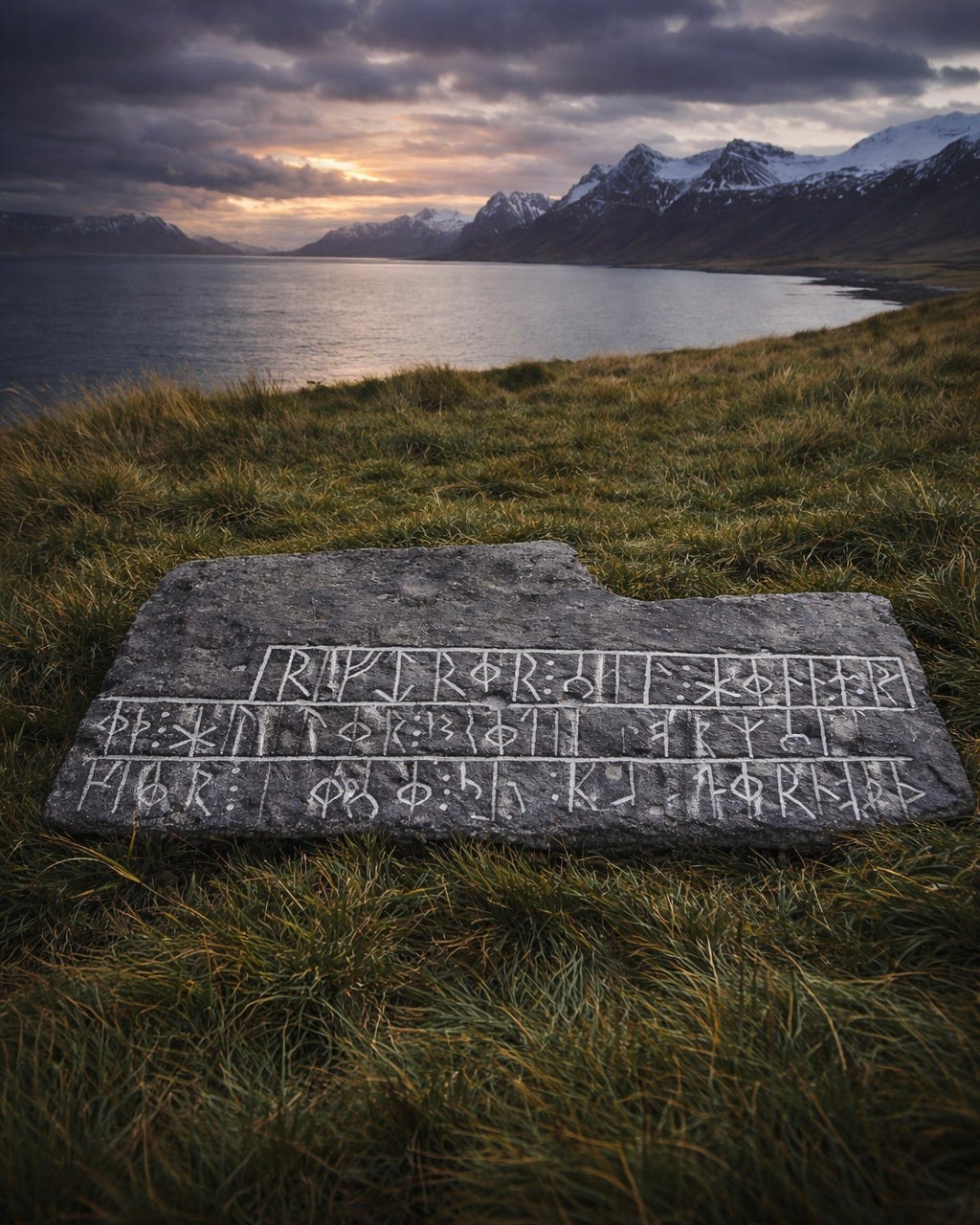
Runes exert a persistent cultural fascination. In contemporary representations, they are frequently associated with images of austere and dramatic landscapes, with Nordic heroes and warriors, and with deities drawn from Scandinavian mythology, all elements that contribute to the construction of an idealised and aesthetically compelling past. They are likewise often linked to purportedly magical or divinatory practices and marketed in visually appealing formats, a combination that can exert a certain appeal even on a more critically minded audience.
A more sober assessment, however, suggests a rather different picture. The extent to which runes may once have been invested with magical significance remains fundamentally uncertain. Moreover, the forms of runes commonly encountered in Iceland-themed commercial contexts bear no meaningful relation to Iceland itself, and the runic tradition, more broadly, cannot be regarded as specifically Icelandic in origin or development.
From a historical perspective, runes constitute an alphabetic writing system. As for their origin, the prevailing scholarly consensus holds that they were largely derived from the Latin alphabet, while alternative hypotheses, such as a Greek or Etruscan derivation, continue to be discussed but command significantly less support. The forms of the runes were, however, adapted to the practical requirements of carving on wood. Given the horizontal grain of the material, inscriptions were executed using predominantly vertical and diagonal strokes, as horizontal lines could easily be confused with natural fissures in the surface. This accounts for the transformation of letters such as “T” into “ᛏ” and “A” into “ᚨ”, where the horizontal stroke is replaced by a diagonal.
Some of the earliest inscriptions remain difficult to interpret and have occasionally been ascribed a possible magical dimension. However, the nature, function, and intended effects of such practices, if they existed, remain entirely unknown. It is not uncommon for uncertain or opaque inscriptions to be tentatively classified as “magical”, a label that often reflects the limits of interpretation rather than demonstrable evidence. While it is plausible that runes may at times have been employed within a broader framework of beliefs involving the supernatural, the available evidence does not allow for any precise reconstruction of such uses.
In modern contexts, runes are frequently associated with divinatory practices. There is, however, no evidence to support their historical use for this purpose. The contemporary New Age practice of rune-based divination appears to derive from an unfounded association with a passage in Germania by Tacitus, in which Germanic peoples are described as foretelling the future by carving signs on sticks. This account lacks archaeological corroboration, and there is no compelling reason to identify these unspecified “signs” with runic characters.
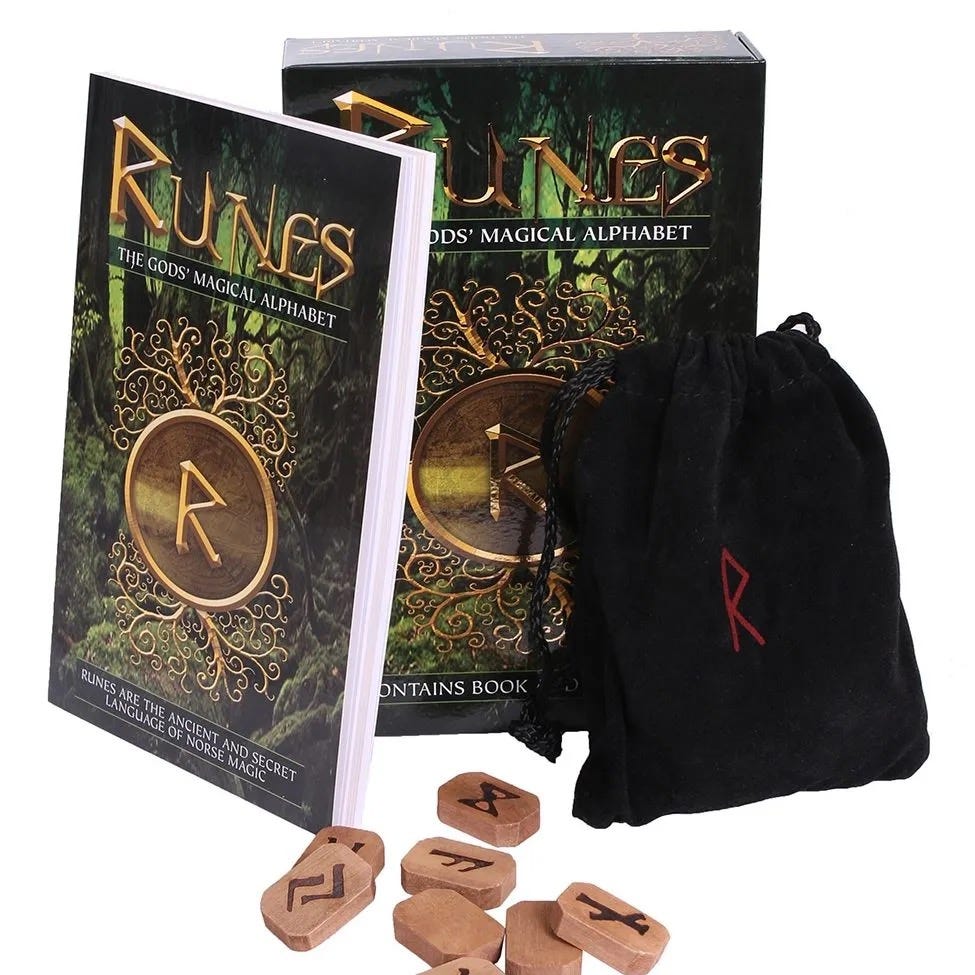
The runic alphabet most commonly encountered in popular culture and Icelandic-themed merchandise is the so-called Elder Fuþark, an alphabet used in continental Scandinavia between roughly 200 and 700 AD:
ᚠ ᚢ ᚦ ᚨ ᚱ ᚲ ᚷ ᚹ • ᚺ ᚾ ᛁ ᛃ ᛈ ᛇ ᛉ ᛊ • ᛏ ᛒ ᛖ ᛗ ᛚ ᛝ ᛞ ᛟ
From around 700 onwards, the Younger Fuþark begins to spread, a simplified system from which the various medieval runic alphabets ultimately derive:
ᚠ ᚢ ᚦ ᚨ ᚱ ᚴ • ᚾ ᚿ ᛁ ᛆ ᛌ • ᛐ ᛒ ᛙ ᛚ ᛧ
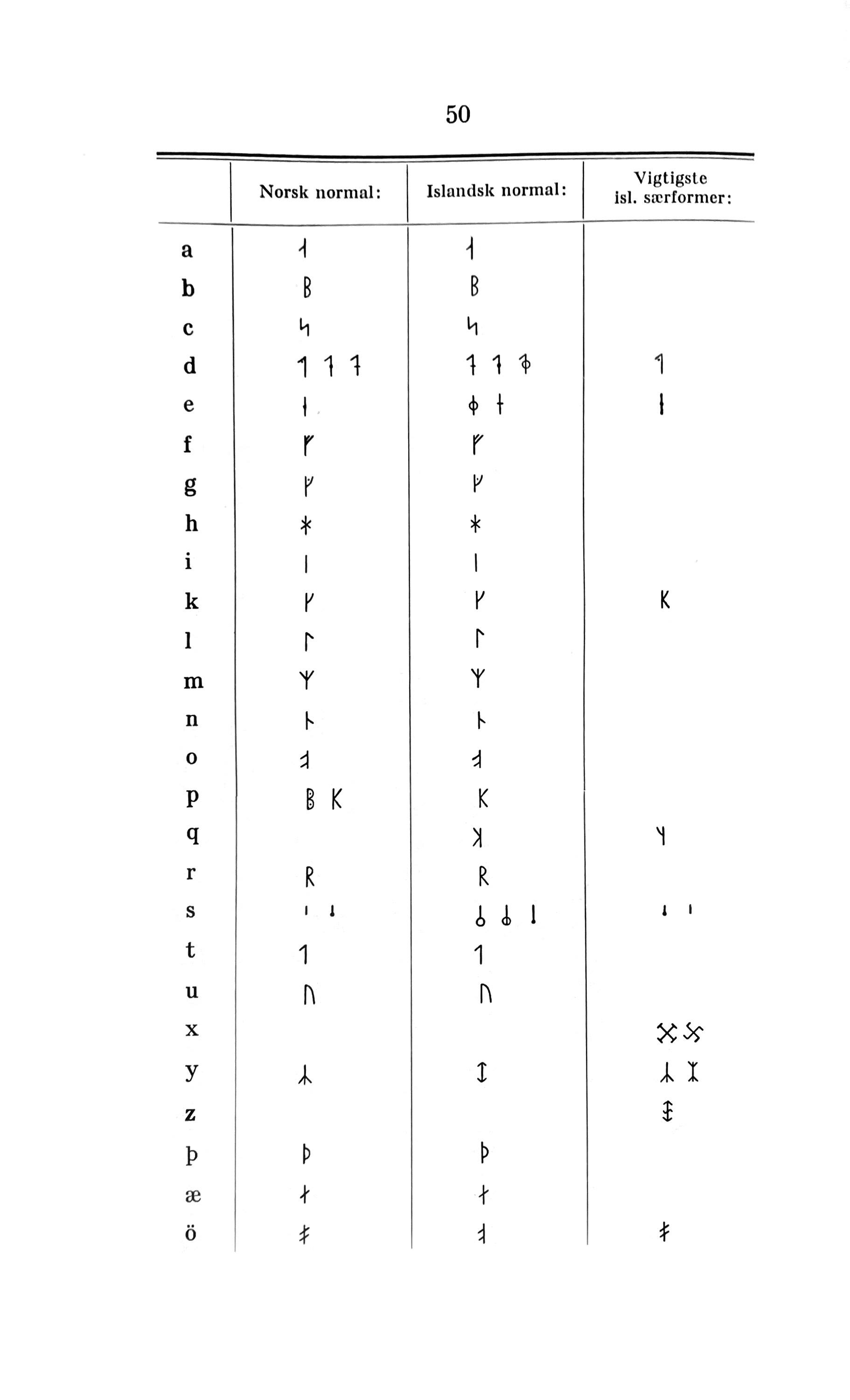
The runic alphabet that is actually typical of Iceland differs substantially from the one used in modern merchandising, a point that becomes immediately clear when the two are compared.
There are around 200 Danish inscriptions datable to the earliest period of Icelandic history, that is, the Late Nordic Iron Age, followed by roughly 2,000 Swedish and about 50 Norwegian inscriptions. To these we may add around 30 from the Isle of Man, a handful from the Scottish islands, and nine from the Faroe Islands. It is precisely during this Late Nordic Iron Age, often rather misleadingly labelled the “Viking Age” (793–1066), that Iceland was settled, according to the conventional chronology between 870 and 930.
For the period of Icelandic history preceding Christianisation, conventionally dated to the year 999/1000, no runic inscriptions on stone have yet been identified. The extant material consists instead of a very limited number of extremely short inscriptions, typically comprising one to three words, often fragmentary or undecipherable. These occur on objects that are themselves difficult to date and, in some cases, may have been imported rather than produced locally.
The earliest known example consists of a small wooden fragment recovered from a stratigraphic layer datable to approximately 900 AD. Only three runes can be tentatively identified, ᚢ ᚱ ᚾ (“urn”). The object may have formed part of a container and is made of yew, a species not native to Iceland, which strongly suggests an origin in Scandinavia.
In her study Rúnum ristir gripir frá Alþingsreitnum og Urriðakoti, Þórgunnur Snædal discusses a number of similar finds uncovered during excavations initiated in 2009 in Reykjavík, a site identified in the written sources as the location of the earliest permanent settlement. Six such inscriptions are documented. Each comprises only a small number of characters, often insufficient to allow for secure lexical identification. The formal characteristics of the runes point clearly to a Norwegian provenance, a conclusion that is entirely consistent with the historical context.
The question of whether these sparse attestations reflect the remnants of a lost local tradition remains a matter of scholarly interpretation. Some researchers argue that, despite their limited number, they may indicate the presence of a runic writing practice. Others contend that such fragmentary, geographically restricted, and quantitatively negligible evidence does not warrant the positing of a “tradition” in any meaningful sense. Any substantial revision of this assessment would necessarily depend on the discovery of a significantly larger and more coherent corpus.
On the basis of the currently available evidence, it is more plausible to conclude that Iceland did not possess a well-established runic tradition. Even in Norway, where the runic corpus is itself modest in comparison with that of Sweden, the use of runes becomes more widespread only after the Viking Age, when they are repurposed in the medieval period for the inscription of brief, utilitarian messages on wooden objects, a medium for which they were particularly well suited in comparison with the Latin script used in manuscript culture. Given that the settlers of Iceland originated primarily from regions of Norway where runic usage does not appear to have been especially prominent, it is unsurprising that no robust tradition was transmitted to the island.
In the Middle Ages, conventionally reckoned in the Icelandic context from the time of conversion around the year 1000, runic writing largely disappears across Scandinavia, with the notable exception of Norway. It is therefore somewhat striking that the first Icelandic runic inscriptions date precisely to this period. Writing in the Latin alphabet must have been introduced shortly after the adoption of Christianity, and by around 1100 we encounter an inscription on a turf-cutting spade, now preserved in the National Museum of Iceland, which is most commonly interpreted as follows:
“Páll owned me; Ingjaldr made me.”
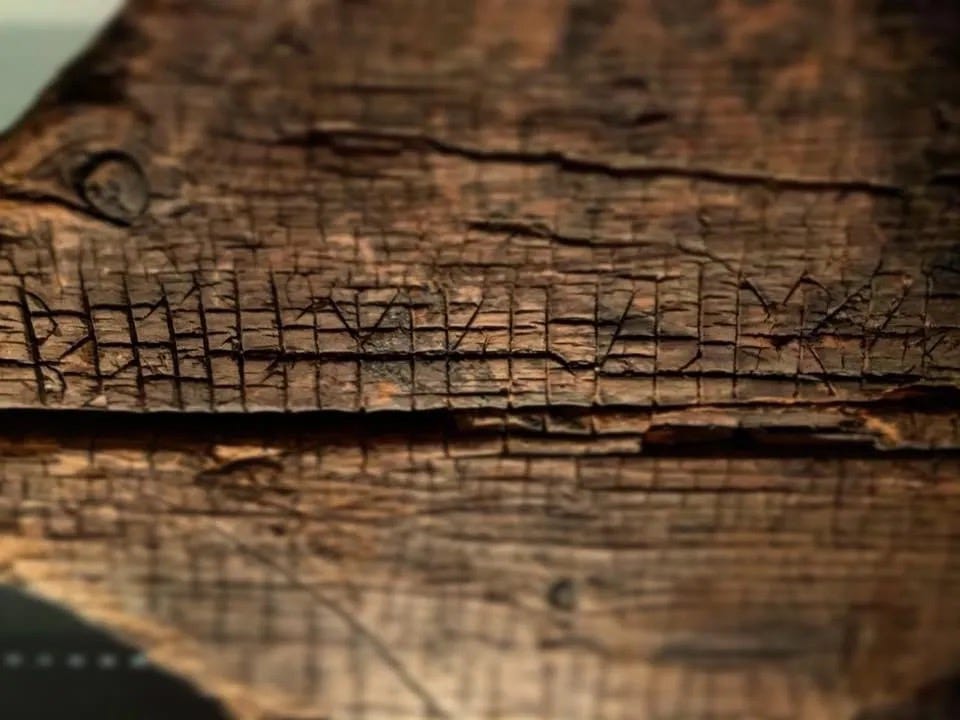
From the thirteenth century we have a short and inscription on the door of a church in eastern Iceland, also preserved in the National Museum, which appears to read:
“(Behold) the mighty king buried here, who slew this dragon.”
However there appears to be a spelling mistake, which point to a hand that was particularly secure.
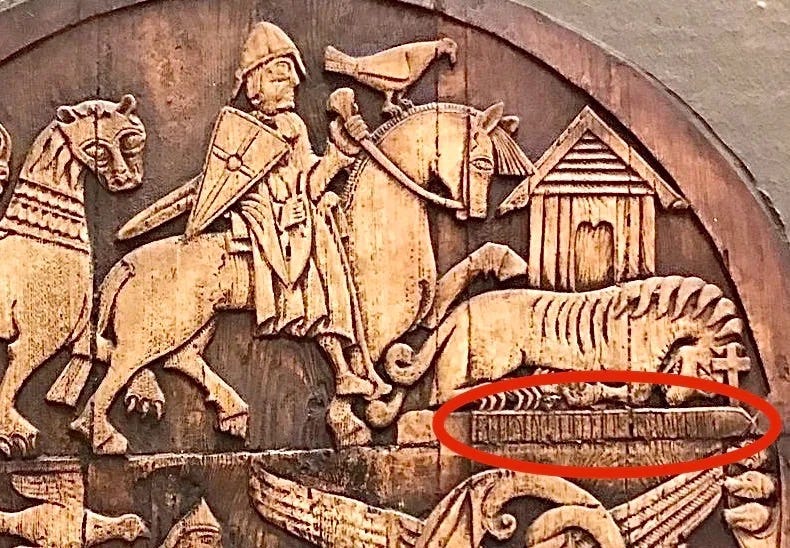
Given such a limited corpus, and one moreover executed in a hesitant and often inconsistent manner, with evident orthographic irregularities, it is difficult to speak of a genuine runic tradition in Iceland. The use of runes appears to have been sporadic, and the surviving inscriptions frequently suggest a limited degree of familiarity with the writing system. At the same time, the medieval period is characterised by the increasing influence of Latin orthographic conventions. As Latin literacy was established relatively early in Iceland, it is likely that any incipient or marginal runic practices were rapidly overshadowed.
In the later Middle Ages, from approximately the thirteenth century onwards, a number of tombstones bearing runic inscriptions begin to appear in Iceland. These should not be conflated with the runestones of continental Scandinavia, which were typically erected as monumental markers with specific commemorative and social functions. The Icelandic examples, by contrast, are conventional gravestones with explicitly Christian content, and they may incorporate Latin religious formulae. The distinction is not merely formal but also functional. Whereas Scandinavian commemorative runestones often invoke divine protection, Icelandic gravestones tend instead to exhort the passer-by to pray for the deceased, a practice paralleled in other European contexts. Old Italian tombstones, for instance, frequently bore the inscription una prece (“a prayer”), inviting precisely such intercessory acts.
This development should not be regarded as surprising. Notwithstanding persistent popular narratives that posit a residual or underlying paganism in Icelandic society, such claims are largely modern constructions, often shaped by touristic or romanticising agendas. In the medieval period, Iceland was fully integrated into the Catholic world, within which the prayers of the living were understood to play a significant role in the spiritual condition of the dead.
The runic gravestone from the Útskálar Church, on the Miðnes peninsula, not far from the international airport of Keflavík, provides a clear example. Its text is to be read starting from the second line, then the third, and finally the first. It reads:
ᚼᛁᛄᚱ : ᚼᚢᛁᛚᛄᚱ : ᛒᚱᛄᛐᛐ?? : ᚮᚱᛉᛍ | ᛑᚮᛐᛐᛄᚱ : ᛚᛄᛍᛄ : ᚦᚢ : ᛕᛆᛆᛐᚱᚿᚮᛍᛐᛄ -ᚱ | ᚠᛨᚱᛄᚱ : ᛍᛆᛚ : ᚼᛄᚿᚿᛆᚱ
hier : huiler : (b)(r)eti– : orms | dotter : lese : þu : paaternoste |r fyrer | sal | hennar
“Here rests Brettiva (?) Ormsdóttir. Say a Pater Noster for her soul.”
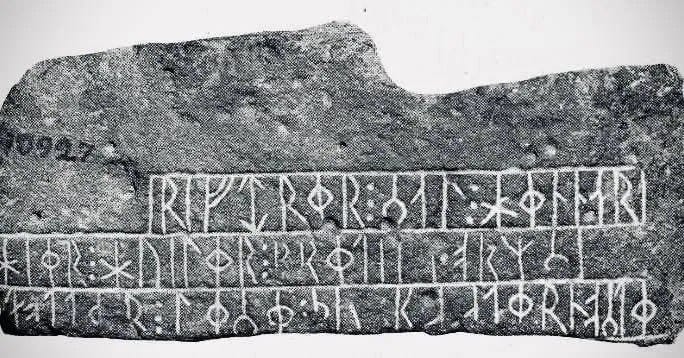
Not only does the content of the inscription clearly indicate that this stone is unrelated to the epigraphic traditions of the preceding millennium, but the linguistic features point in the same direction. Early runic writing did not ordinarily mark geminated consonants, whereas this inscription does so (e.g. dotter, hennar), reflecting a convention adopted from Latin orthographic practice, which by this time had become dominant in Iceland.
Following the Lutheran Reformation, completed in 1550, runic characters experience a modest resurgence, including in manuscript contexts. At this stage, however, they are employed primarily as a form of cipher, that is, as a “secret alphabet” intended to restrict access to the content of a text. They also make occasional appearances in grimoires, the magical handbooks of the early modern period, where their forms are frequently modified or distorted. Even in these contexts, however, their use is typically embedded within a framework of angelic or demonic invocations consistent with a broadly Christian cosmology.
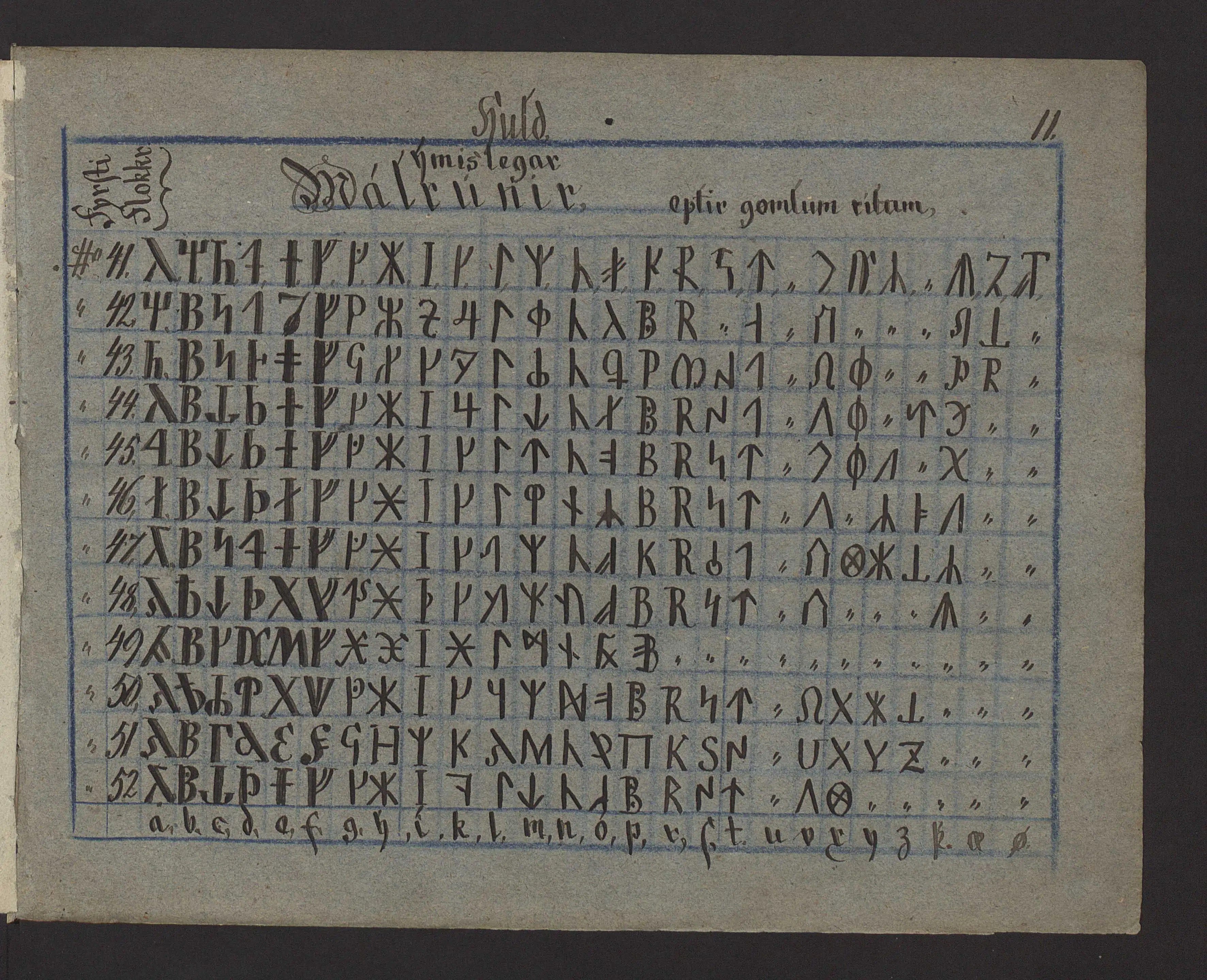
It is essential to distinguish runes from galdrastafir, the so-called “magical staves”, such as the ægishjálmur and the vegvísir. The former is first attested in a seventeenth-century manuscript known as the Lbs 143 8vo, Galdrakver (“Booklet of Magic”), while the latter appears in an 1860 manuscript: ÍB 383 4to, Huld. These symbols belong to an early modern esoteric tradition and are found primarily in texts concerned with magic and herbal practices. Their more or less direct antecedents are the demonic sigils attested in works such as the Key of Solomon, part of the broader corpus of Renaissance European magic that claimed, often retrospectively, to derive from ancient Hebrew wisdom. They bear no relation to the Nordic Middle Ages, nor to the historically ill-defined category of the “Vikings”.
The frequent association of these symbols with the ancient runic alphabet, as seen for instance in tattoos or jewellery marketed in Iceland, represents a clear historical conflation. It is analogous to associating the emblem of the Italian Republic with the Greek or Phoenician alphabet: the two belong to entirely different contexts and traditions, and no meaningful connection can be established between them.
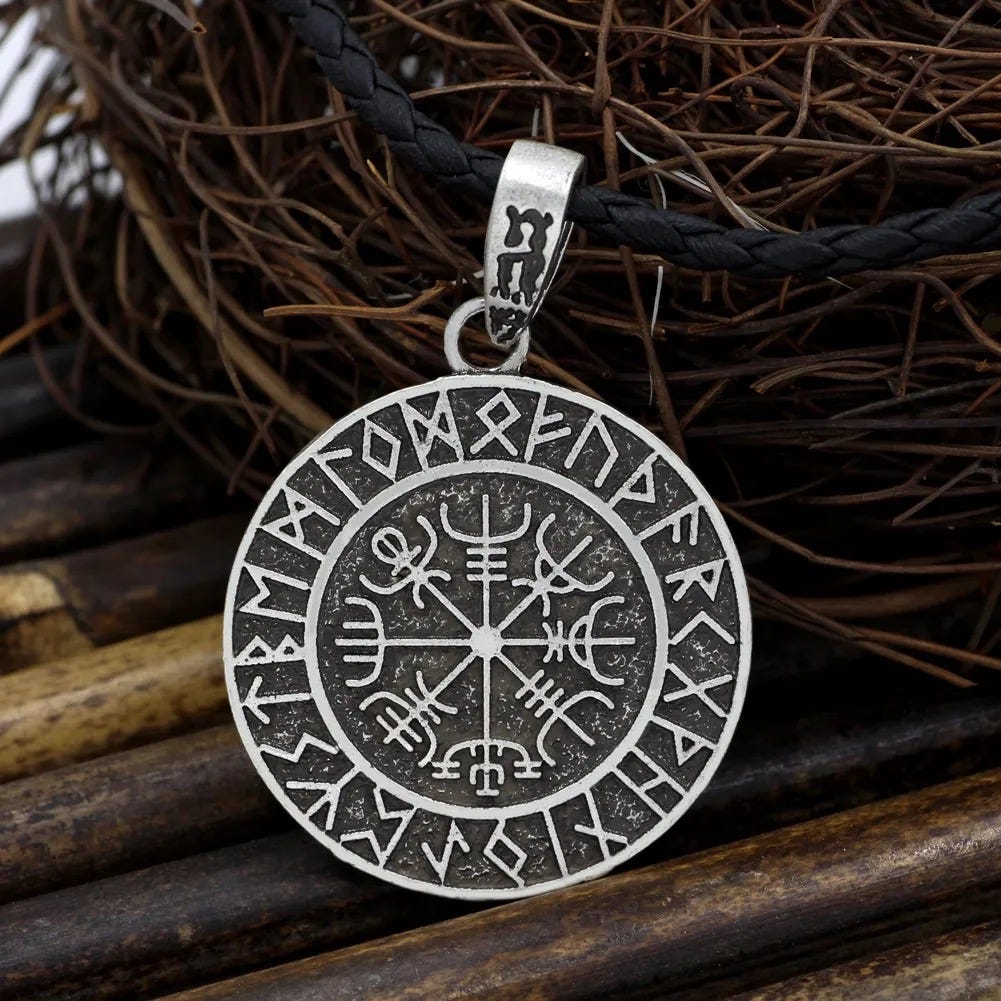
Nor should one assume that the presence of runes or unusual symbols in early modern magical texts reflects the survival of a pre-Christian tradition that remained dormant for centuries before re-emerging. The manuscript ÍB 383 4to, Huld (1860), for instance, contains numerous cipher systems, some of which incorporate runic sequences, but these are better understood within the intellectual and cultural context of their own time.
How, then, is this later reappearance of runes to be explained? The answer lies primarily in antiquarian interest. Just as humanists and Renaissance scholars in southern Europe sought to recover and emulate the classical past, so too in Scandinavia there developed a growing fascination with a more remote antiquity. As elsewhere, this process was accompanied by a succession of misunderstandings and reinterpretations, often resulting in an idealised and historically inaccurate reconstruction of the past, shaped by incomplete knowledge and, at times, by a willingness to supply conjectural explanations in the absence of sufficient evidence.
In light of the available evidence, the modern perception of runes as intrinsically magical symbols rooted in a distinctly Icelandic past must be regarded as a product of later reinterpretation rather than historical reality. Runes were, first and foremost, a writing system, only marginally and sporadically attested in Iceland, and largely superseded at an early stage by the adoption of the Latin alphabet. Their subsequent revival reflects antiquarian curiosity and cultural reconstruction rather than continuity. A critical approach, attentive to chronology and context, is therefore essential in order to disentangle historical practice from later myth-making.
The contents of this article are largely drawn from a seminar held at the University of Iceland in May 2021, coordinated by Alessia Bauer, one of the world’s foremost experts in runology, as well as from volume II of the prestigious Bibliotheca Arnamagnæana, Islandske runeindskrifter (“Runic Inscriptions of Iceland”) by Anders Bæksted (1942) and from Þórgunnur Snædal’s monography Rúnir á Íslandi (2023; Stofnun Árna Magnússonar í íslenskum fræðum).
Great article 😌
If you’d like to talk to a runologist about the runes in Iceland, I’m always happy to chat!